: a very strong feeling of fear
: something that causes very strong feelings of fear : something that is terrifying
(merriam-webster.com)
An email comes through just as your planning time is beginning. "Teachers, please assemble in the media center for your training on the newest gadget ". A sudden fear overtakes you! Technology training again? I still have not learned how to use Microsoft Office.
.jpg) |
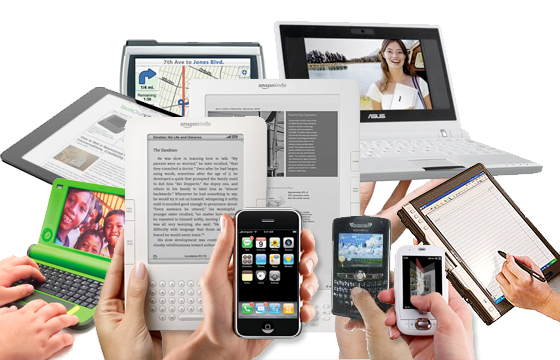
| Picture taken from http://www.joannejacobs.com/2014/03/teachers-get-tech-but-not-training/ Technology is everywhere. From the development of the wheel in Prehistoric times to our modern Smartphones, technology has made life easier. I began my teaching career in 2001, during the era of no online gradebooks, no computers in the classrooms, no digital projectors or document cameras. Now, I can not imagine teaching without these tools. If technology promises to improve our teaching, become more efficient with our instructional day, and improve instruction to our students, why are many teachers afraid of it? In January 2013, PBS/Learning Media conducted a survey of 503 teachers. The teachers ranged all content areas and grade levels PK-12. Overwhelming, the teachers surveyed agreed that technology makes their work day more productive and allows for students to be reached in many different modalities. The technology is not the problem, the training is. .jpg)
There is often a mismatch between technology training and the teachers the training is supposed to serve. Just as students come to the classroom with varied experiences and background knowledge, so do teachers. I love science and technology. For me, technology is just the application of my favorite subject, science. I enjoy reading about new discoveries in the field that I can use to help my students become college or career ready. Becoming technologically literate is an important skill needed for students to have productive and successful careers in the increasingly globally connected world. There several barriers that make technology training difficult and not well received:
1. Equipment and software are kept current, but the technology training is done in a haphazard way. My school received 100 new Chromebooks for testing but the grade levels that are testing using the new Chromebooks are still waiting for training. The Georgia Milestones are only three weeks away. I think paper-pencil testing maybe be best in this situation.

2. Like any new skill, practice is always necessary.Teachers are not given an appropriate amount of time to practice with new software or hardware and are expected to remember how an application works 6 months after the actual training. Teachers who are truly effective in the classroom usually have little or no spare time, and they are often not paid for the time they must put into learning new technologies.

3. We forget some people just don't naturally like technology. I write code for fun and am becoming a Google certified teacher just for fun. It is beyond me why anyone would want to teach language arts instead of science (well, not really. Language is cool too!) Well, some people just don't see the thrill of technology and find its use stressful.
The way to combat those issues is to provide relevant, timely, technology that focuses on the strengths and weaknesses of the staff. Every year at my school, the media specialist sends out a survey asking teachers what training opportunities would they like to embark on. In a technology rich district such as Clayton, there is a lot to be trained on. From I-pads, Interwrite Pads (our digital classroom suite), Thinkgate, Turning Point, Edmodo, ExploreLearning, the technology training department is kept pretty busy. With my school's small size however, the county technology department often forgets about us. My school has decided to set up a technology team in house to provide support for new software and hardware that comes out and provide additional training after the spotly county training. Having colleagues that have "beta tested" various programs and hardware is helpful in building a professional learning community. Although the media specialist is often seen as the "tech guru" in the school, all teachers can become gurus as well. There is a wonderful website that offers lessons on many Web 2.0 tools used in schools today:
http://www.teachertrainingvideos.com/ These videos could be used to supplement training and also provide refresher courses for teachers who need them.
|